
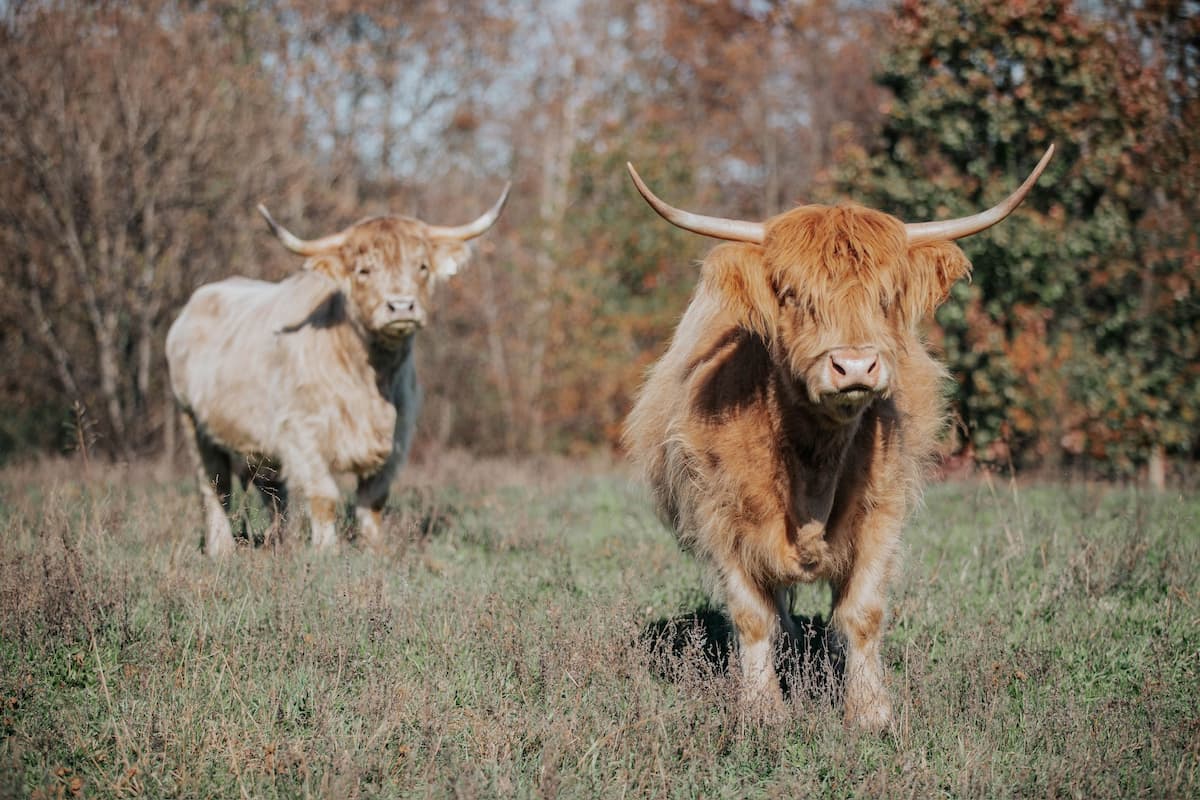
Scottish Highland cattle are instantly recognizable: the long shaggy hair hanging over the eyes, the curved horns, and the sturdy frame all mark this iconic breed. As exotic as these delightful creatures are, a herd of Highland cows in south-central Pennsylvania is completely unexpected. The shaggy and adorable calves born here make their way to families and farms as part of the efforts of PA Mini Cows.
Always a beloved subject for photography and art, Highlands are rising in popularity as pets. It is easy to understand the appeal. They are hardy creatures that can thrive in all seasons with just a basic shelter and some grazing space. Like goats, Highland cattle will keep a pasture or semi-wooded area grazed. They are also friendly and gentle creatures that can be easily raised to take a halter, making them a great fit for families with children.
Despite their popularity and positive attributes, Highland cattle are hard to find, and miniatures even harder. But Jesse and Sadie Smucker, the founders of PA Mini Cows, are working to help make people’s dreams of owning a mini-Highland cow into reality.
Raising miniature cows began as a hobby for the Smuckers. Jesse grew up on a dairy farm and always had a passion for cows. He and Sadie both felt that growing up taking care of animals was good for children and wanted that experience for their family. They were also blessed to be situated on a seventeen-acre farmette with plenty of pasture space, though not enough to support a dairy operation. Needing livestock that works on less acreage, they eventually settled on miniature Highland cattle. Their herd started in 2024 with a single bull and several cows and has continued to grow.
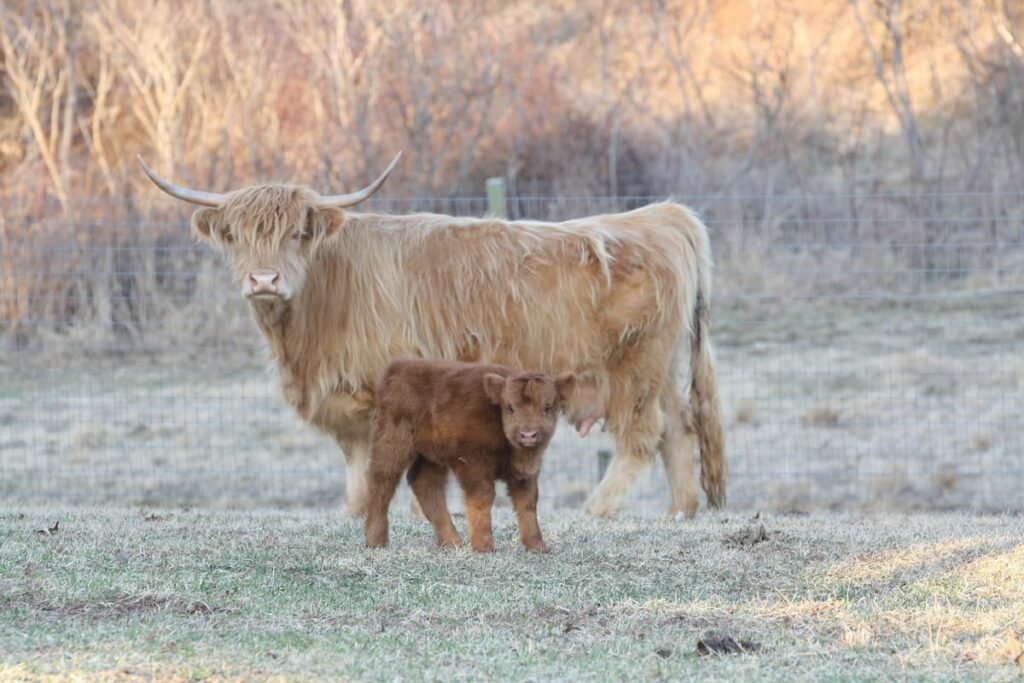
The Smucker’s first bull, named “Daddy’s Money” by his breeder, stands only thirty-nine inches tall. He is much shorter than the standard Highland bull because he is the carrier of a Chondrodysplasia gene. Often referred to as the “Chondro” gene, it causes the carrier to be much shorter than otherwise. The small size makes him valuable to a breeder hoping to produce miniature Highlands. In addition to this first bull, the Smucker’s recently added Gary, another Chondro-positive bull from South Dakota. Gary is a silver-colored 100% Highland bull whose genetics will be helpful to produce more of the colors that are popular in the miniature Highland industry.
When their bulls are crossed with a 100% Highland cow without the Chondro gene, the offspring are likely to be miniature but still have all the characteristics of a pure Scottish Highland. On average, each of their offspring has a 50% chance of having the short stature and barrel chest that comes with the Chondro gene. This is important for breeders wanting to sell miniature Highland cattle.
Scottish Highland cattle are a smaller breed of cattle naturally, but they don’t usually qualify as miniature. To be a true “miniature” cow, the height from the ground to the hook of the hip needs to be between 36 and 42 inches. Cattle shorter than 36 inches are called “micro minis,” while those between 42 and 48 inches are classed as “mid-size.”
While size is an important part of the breeding program, PA Mini Cows is also interested in two other traits, both concerned with hair. First, they want calves that are hairy—the more hair the better. The color of the coat is also important. Silver is one of the most popular colors for customers, alongside white and dun. Between their two bulls and nine cows, PA Mini Cows has many options to produce tiny, fluffy, and colorful calves for their customers.
Breeding Scottish Highland herds is not a common industry, especially in Pennsylvania. Most of the farms that are raising the breed on a commercial scale are located on the west coast, and they haven’t been able to keep up with the demand. The exotic animal industry has seen a lot of growth in the last five years, and specialty cattle are no exception.
What is driving the growth? Part of the explanation could be the backyard agriculture movement. A growing number of people in broader American culture are interested in reclaiming a heritage of farming, if only in the small scale of their home. Some are raising vegetable gardens, some are raising small flocks of chickens, and some want to put a miniature cow in a pasture. And Scottish Highlands are popular on their own, as customers just can’t seem to get enough of the picturesque creatures and their deep eyes peeking through hairy forelocks.
All the attention means there are plenty of people on the lookout for a mini-Highland of their own, and PA Mini Cows is happy to meet the need. Jesse and Sadie love helping customers in search of a mini cow of their own and, as they described it, “Connecting the dots so that people’s dreams come true.”
There are two sides to the work of connecting people with mini calves. On one side, there is the work of herdsmanship that produces healthy calves. On the other side, are the sales and marketing work that bring in customers to connect with the calves. Both sides play an important role, and each relies on a different set of skills.
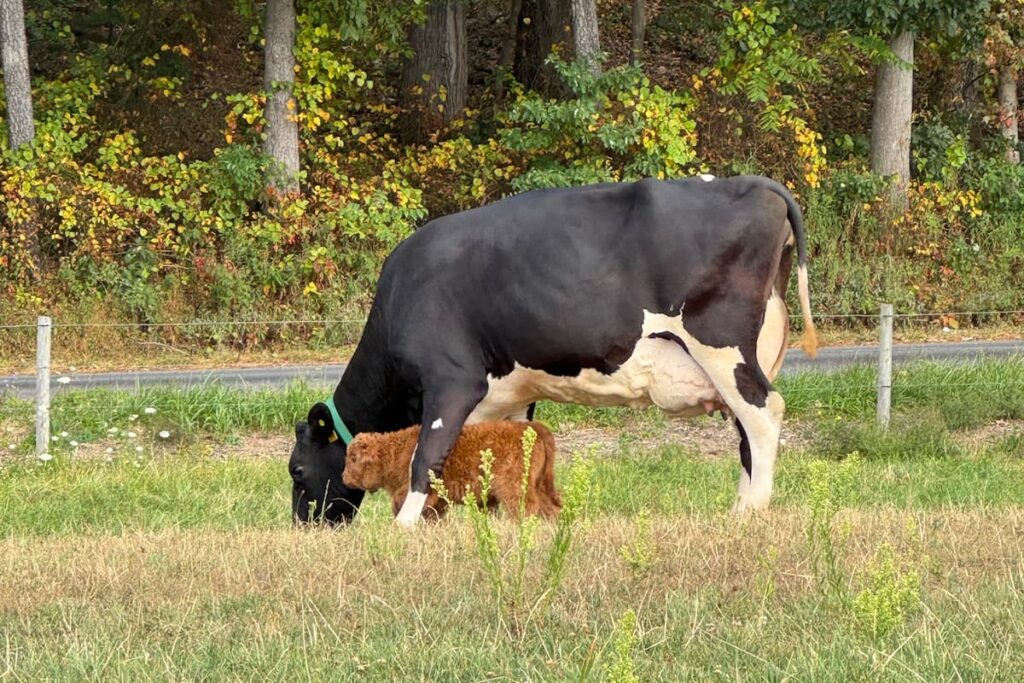
The herdsman side of PA Mini Cows relies on careful planning and attention to detail, especially as the method for calving has shifted. In 2025, the herd produced six calves in natural births from the Highland mother and six calves in surrogate births from ordinary dairy cows—that’s right, a furry little Highland calf birthed by a big and bony Holstein! It’s an unusual process that takes careful planning.
After a cow in the Highland herd is bred successfully it is “flushed.” The process removes the embryo from the cow in which it was conceived. The embryo can either be frozen for future use or implanted directly into another cow. The Holstein cow that receives the embryo then gestates and eventually births the Highland calf.
High beef prices make every calf valuable to a farmer, so it could be difficult to find a herd of cows to use as surrogates, but one of the recently added co-owners of PA Mini Cows is ready to make his dairy herd available. JR is Jesse’s brother and has a hundred-cow dairy operation on the family farm where he and Jesse grew up. JR, like his father before him, buys mature cows to maintain his herd, selling off his calves rather than raising them on the farm. This means that the cows in his herd can play a part in helping families have a fluffy backyard pet cow. PA Mini Cows is expecting to reach their goal of birthing sixty calves through the dairy herd in 2026. With the current size of the Holstein herd, they would be able to birth around eight Highland calves each month, which means there is plenty of room to grow the business model.
The work of managing a Highland herd in this way can be complicated. Choices need to be made about which bull and cow will be paired to produce the most-desired offspring. Then careful scheduling is needed to make sure the supply of embryos or eggs is sufficient for the cows available to host them. And other factors need to be weighed; for example, Highland cows have a harder time conceiving during the heat of summer, so the herd manager might want to avoid trying for natural conception over the summer months and try IVF (In-Vitro Fertilization) instead.
With the right knowledge, some of these decisions are easier. For example, a herd manager might know that IVF is only successful 40-50% of the time, while conventional can be 60-80% successful. But where does one find that type of information? For Jesse, the answer is simple: “Ask! If you don’t know something, ask someone who does.” His business model is built on knowledge gained by spending hours on the phone with people who are willing to share what they know.
But the careful management of the herd is only half of the miniature cow business. That side could be thought of as the production side; on the other side of the business is marketing and sales. Each Highland calf needs to be connected with a customer, and those customers often need some help in getting started with their new calf.
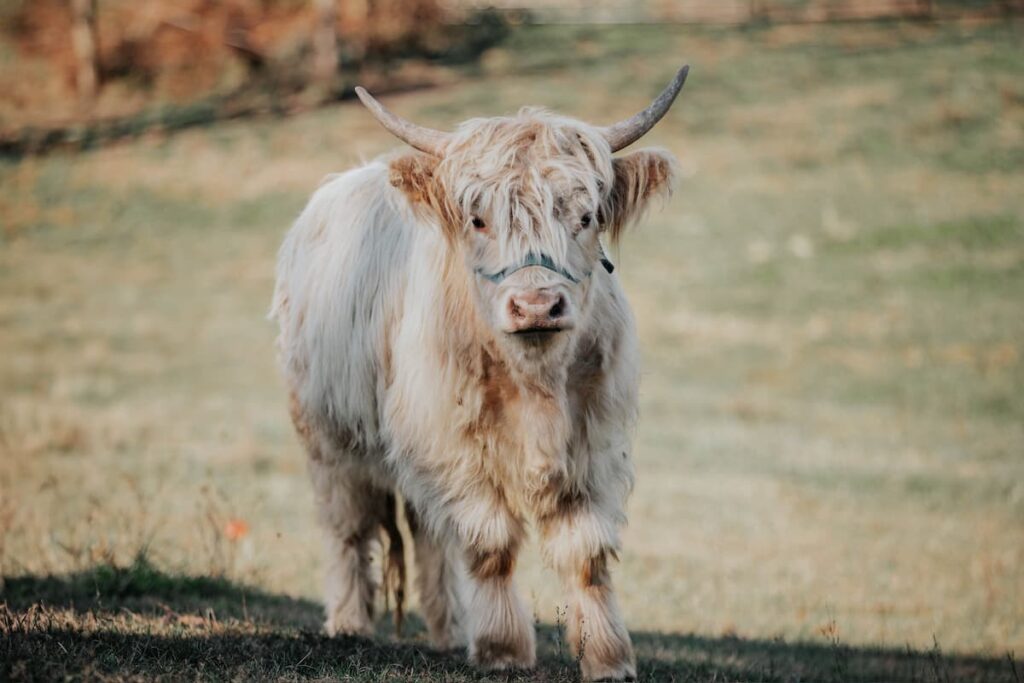
The relationship between PA Mini Cows and their customers is different from many other industries. Many customers have a dream about adding a miniature cow to their back yard pets, but few know what goes into caring for one. That means it is important for Jesse and Sadie to start by making sure the customer knows what they are getting into. Do they have a good living space, and do they know what it takes to take care of the calf? What questions and uncertainties might the customer have?
After getting to know the customer and making sure they are ready to have a miniature Highland cow, it is time to figure out what characteristics the customer wants. If they are particular about the gender, color, and size, there likely won’t be a calf just waiting to be picked up. They may need to be put on a waitlist until the right calf is born.
Even after the calf is born, the customer will need to wait a little more. PA Mini Cows has two programs available for their calves. The first option for the customer is to take the calf at two weeks old. At that age the calf will have all its necessary vaccines and needs to be bottle-fed regularly. This would be the preferred option for most families, as it allows for strong bonds to form early.
But not every customer has the capacity to bottle-feed and then wean a calf. For those customers, PA Mini Cows provides another solution. The twelve-week program takes the calf past the bottle-feeding stage. It also gives the Smuckers time to halter train the calf before it goes to its new home. This is the preferred option for other breeders who are building their own herd or for customers like photographers or petting zoos who would like to start with a calf that is already comfortable around people.
Whichever path customers choose, Jesse and Sadie want to make sure they are ready for the adventure of adding a Highland calf to their lives. That includes making sure the customer has all the necessities from day one. Each customer not only gets a cute little calf, but they also receive a supply of feed, a halter, and all the advice they need to feel confident.
Customers appreciate that support. “Jesse and Sadie and everyone associated with PA Mini Cows were a pleasure to work with. They are honest, clear, and quick communicators and never let us hanging or questions left unanswered” reported the Johnsons, one of the first customers to go through the buying process.
While the work of connecting customers to their very own Highland miniature is in its early years, there are already a few ideas of what could come. Jesse looks around his farm and sees the potential for inviting people to come and experience the friendly cattle first-hand. Not everybody has the space to own their own cattle, but many people would love the chance to spend a little time with them, taking photos and appreciating their charm. A bed and breakfast, a gift shop, or farm tours could all be future ways to bring more people face to face with the gentle creatures and the family who cares for them.
Interested in adding a miniature Highland to your pasture or learning more about how to start a herd of your own? Stop by for a visit at 1013 State Route 25, Millersburg, PA 17061, or find more information at paminicows.com or by emailing [email protected].
Delmar Oberholtzer lives in Strasburg, Pennsylvania, with his wife, Elizabeth. He serves as a teacher leader for Ephrata Mennonite School and enjoys freelance writing in his spare time. He can be reached by email at [email protected].