
Have you ever felt envious of a college-educated person you met in the course of your work, someone who was confident, competent, well-compensated, and apparently quite successful? Maybe you didn’t feel envious as much as intimidated.
Perhaps this person studied business for four years in university and graduated with an MBA (a master’s degree in business administration). Comparing yourself to him, you feel like an ignorant farm boy.
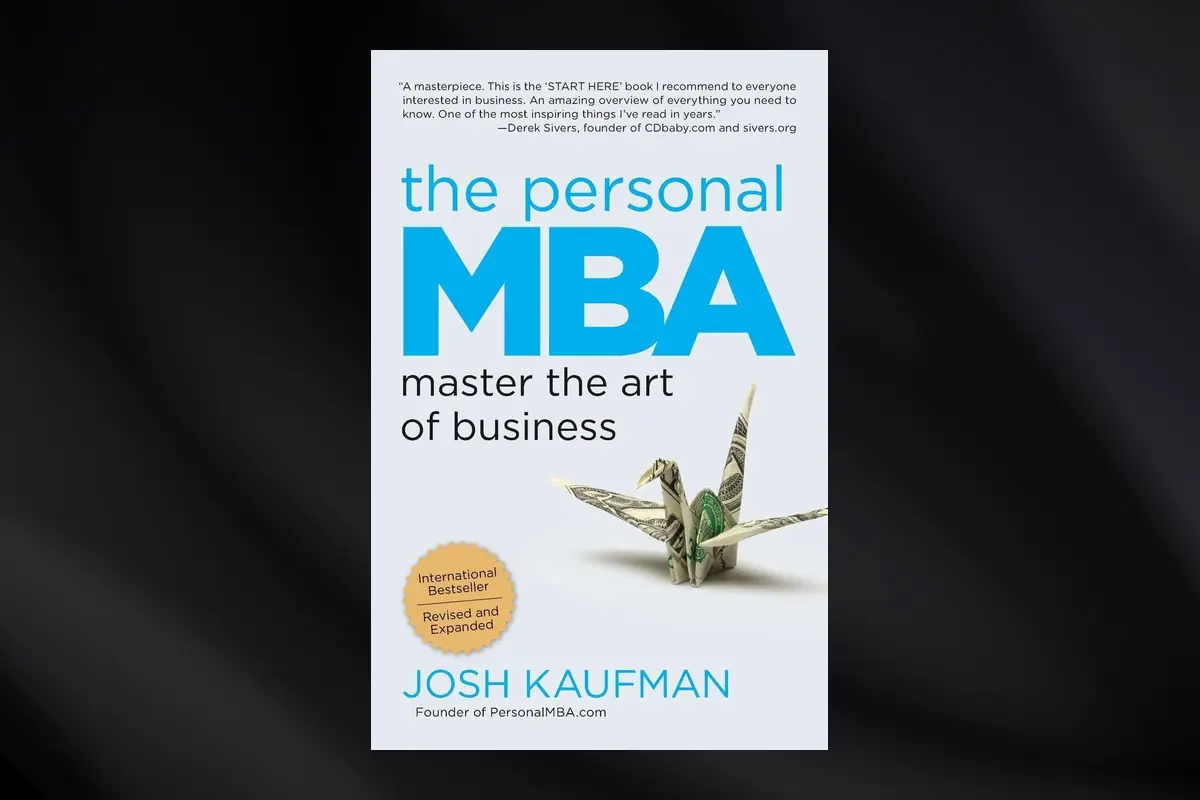
Josh Kaufman thinks you might be better off without that MBA. Debating whether to enroll in an MBA program himself, Kaufman remembered what someone had told him: “If you put the same amount of time and energy you’d spend completing an MBA into doing good work and improving your skills, you’ll do just as well.”
Learning Business
Kaufman decided to skip business school, but not business education. He writes, “Instead of enrolling in an MBA program, I hit the books, creating my own personal MBA.”
That’s the idea behind the title of his book. Kaufman read stacks of business books, began compiling the knowledge he gleaned from each one. Working for global giant Procter & Gamble at the time, later Kaufman became a business consultant. Eventually he became a writer, realizing that he could help others succeed in business.
Kaufman intends to help each reader achieve their own “MBA” by teaching them the concepts, models, and principles behind three things:
- How businesses work
- How people work
- How systems work
The result is what he calls “a self-directed crash course in business.” As such, Kaufman’s book is a good fit for PCBE readership. As practical-minded people, we are skeptical of the need for university degree programs.
Even laying aside the concerns about the expense and ungodly environments associated with higher education, we prefer to make things happen ourselves through a combination of common sense, homegrown ingenuity, and trial and error.
However, business is complicated, and it may not be long before we realize we are in over our heads. While we learn a lot from experience, investing in business education can save us from hard knocks.
The chapters related to “how people work” make the book helpful to a wider audience than just those who work in operations, finance, or leadership. People are an integral part of business, and understanding people makes us more effective.
A Business Handbook
The Personal MBA teaches 271 concepts related to business. Each concept is explained in a short section covering about a page and a half. The brief sections often include a short story or example from business, followed by deeper explanation of the concept, how it works, and how other concepts interact with it.
The 271 concepts are organized into eleven chapters: Value Creation, Marketing, Sales, Value Delivery, Finance, The Human Mind, Working with Yourself, Working with Others, Understanding Systems, Analyzing Systems, and Improving Systems.
This unusual approach, somewhat like an encyclopedia, makes the book easy to browse. You can quickly find the topics you are interested in. Unlike a encyclopedia, this business handbook is not boring. Kaufman does well at keeping it interesting and readable, not dense, abstract theory.
Example concepts
Following are a variety of terms from the book, along with the chapter that discusses it.
Allowable Acquisition Cost: How much can you afford to pay in marketing expenses to acquire a new customer? The book explains the concept and how to come up with a dollar figure. (Finance)
Commander’s Intent: This is a useful concept for delegating. Don’t only convey the process, but also share your vision for the outcome. If the situation changes, and the plan or process no longer applies, employees can adapt and achieve the goal because they know your intent. (Working With Others)
Four Methods to Increase Revenue: There are only four ways to increase revenue: increase number of customers, increase average size of transactions, increase frequency of transactions, or raise prices. (Finance)
Friction: Friction is anything that requires extra effort from your customers or employees. Adding or removing friction changes behavior. (Improving Systems)
Measurement: You know something is not working, and you have a gut feeling which part of the process needs improvement. But before acting on your gut, can you first measure something to get objective data? “Without data, you’re blind.” (Analyzing Systems)
Next Action: You are procrastinating on a large project because it feels overwhelming, or you’re not sure how to complete it. To make progress, figure out the first step to take, and take that single action. Then do it again. (Working With Yourself)
Slack: Slack in a system allows flexibility and margin. Slack can be time, money, or resources. Because slack is expensive, it needs to be the right size for the size of the system. (Understanding Systems)
The Iron Law of the Market: A business will not succeed if its market is not large enough. (Value Creation)
Conclusion
I first read this book over ten years ago and have referred to it occasionally ever since (Kaufman has now come out with a second edition). It is especially valuable for young people interested in learning about business.
The Personal MBA is not just for entrepreneurs or business owners. Employees will benefit from learning the terms and concepts they interact with daily, becoming more valuable to their employer.
Disclaimer: Many of the books being reviewed in this section are written by authors who may not share our Anabaptist values. While the books contain beneficial and constructive principles for business management, you may occasionally encounter terminology that is not endorsed by the Anabaptist reader. Please read with discretion.