
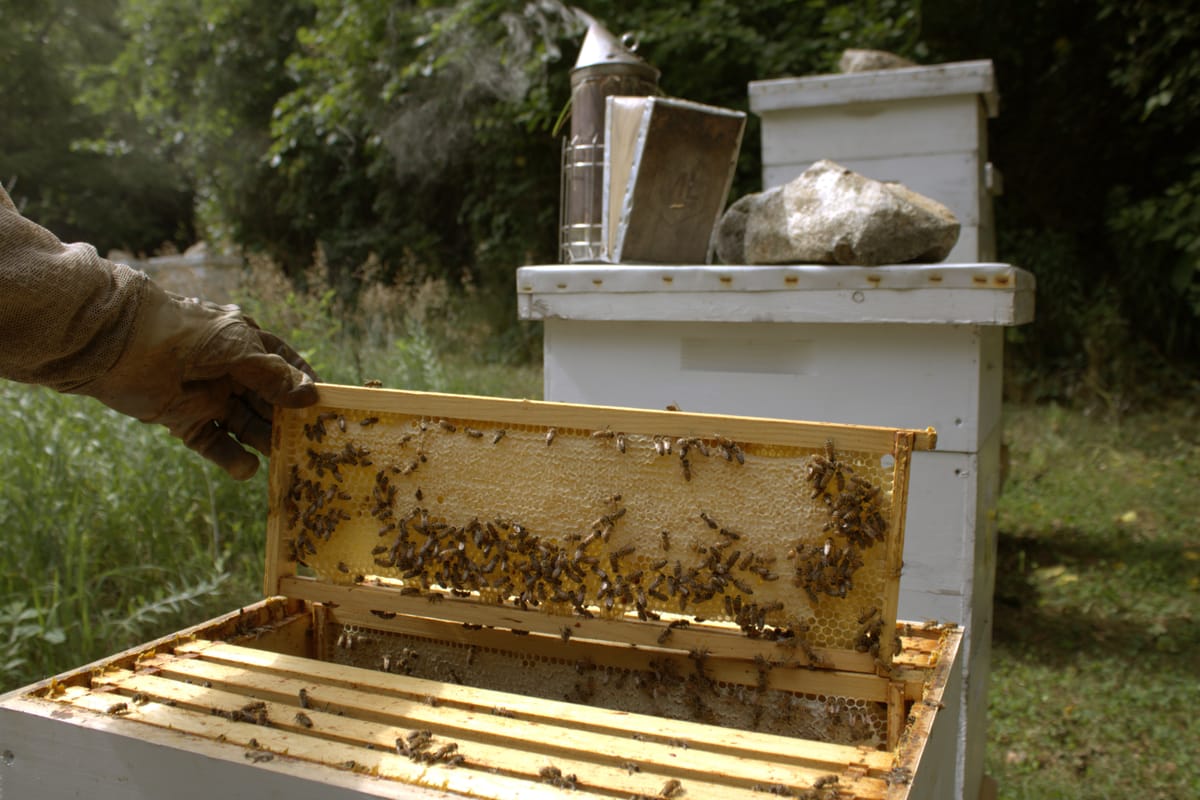
When Joseph Stoltzfus opens a hive for weekly inspection, the first thing he looks for is the queen—because much like in chess, the queen is the most valuable piece. During the peak spring nectar flow, the queen can lay 2,000 eggs per day—roughly one every forty seconds, adding up to more than her body weight in eggs! To borrow the words of another famous queen, “the half has not been told” about the marvels of the honeybee.
For Joseph, working with bees is a privilege. He says, “I love bees; they fascinate me. When I saw I could make a living by following my hobby, that was a win-win!”
A Hobby Takes Flight
Joseph got his first three hives at age 17, but like many beginners, he lost all of them during his first winter. Rather than giving up, he bought four hives from his great-uncle the following spring and started over. In the ten years since, he has grown those four hives into two hundred hives, including one hundred forty production hives.
In his third year of beekeeping, Joseph began selling bees in the form of nucs. Short for nucleus colony, a nuc is a small starter colony complete with a healthy laying queen and worker bees.
Along with bees, Joseph also began selling wooden hive boxes, which he had learned to build for his own use. When customers asked where they could purchase other essential equipment—such as smokers, hive tools, and protective suits—he recognized another opportunity for growth. He contacted several suppliers and secured a dealership with Mann Lake Beekeeping Supply. What had started as a hobby steadily became a business.
Eventually, Joseph faced a difficult question: Could he make a living solely from bees?
He decided to find out.
“I took a deep breath and made the jump,” he says.
Building hive boxes provided shop work through the winter, while the rest of the year was devoted to managing his growing apiaries. Sales of bees, equipment, and supplies rounded out his income.
Joseph acknowledges the challenges of these first years as he built his bee numbers and his customer base. But the prospect of working for himself and spending more time at home has been energizing. He hopes to see his boys take an interest in bees and work alongside him in the business someday.
For Such a Time as This
Every hive needs a healthy, egg laying queen. So whether Joseph is replacing queens in his own production hives or outfitting nucs for sale, he constantly needs high-quality queens. To meet that demand, he learned the intricate art of queen grafting.
Joseph starts by selecting one of his best hives. He removes a frame and gently scrapes away a portion of the comb, exposing the tiny larvae beneath. He is looking for larvae less than two days old. Using a delicate grafting tool, he lifts each larva and places it into a separate queen cup.
Then he loads fifty cups onto a grafting bar and slides it into a strong, queenless hive. The bees are highly motivated to raise a queen, and with Joseph’s careful intervention, they devote tireless care to all fifty young larvae.
That care consists primarily of flooding the queen cells with royal jelly. Royal jelly is a protein-rich, milky secretion that all bee larvae receive in their first days of life. But whereas normal larvae would switch to bee bread (honey and pollen) after only two – three days, queen larvae are fed the royal jelly for five days and in large quantities. That difference in diet transforms an ordinary female larva into a queen.
Compared to a worker bee, the queen develops a radically different body. She has fully developed ovaries capable of laying thousands of eggs a day, a spermatheca that stores millions of sperm after a single mating flight, and a smooth stinger. Unlike the barbed stinger of a worker bee, the queen’s smooth stinger allows her to sting repeatedly without dying—a weapon she uses primarily against other queens.
The differences don’t stop there. Queens also develop faster than worker bees and can live up to 40x longer.
Joseph keeps a close watch on the process, noting when the nurse bees cap the queen cells. Only eight days after capping, the miraculous transformation is finished, and the new queens are ready to emerge.
Experience has taught Joseph the importance of acting before that happens. He either removes the queen cells or places them in individual queen cages before the first queen emerges. A colony can have only one queen, and the first one to hatch instinctively seeks out her rivals, tearing open their cells and killing them before they ever have a chance to emerge.
The next step for the developing queens is a mating flight. If mated well, they will be equipped for a lifetime of laying fertilized eggs. Those fertilized eggs will become female bees, either workers or, under the right conditions, future queens.
Queens that are mated poorly may begin laying unfertilized eggs. Surprisingly those eggs are not sterile; they become drones. A colony with a drone laying queen is on the fast track to extinction, so worker bees react quickly by raising a replacement queen.
One of Joseph’s challenges in raising queens is the danger posed by purple martins and barn swallows. While many people welcome these birds for their mosquito eating skills, Joseph sees them as a threat to his queens. Queens only leave the hive for their mating flights, but their larger body size makes them especially vulnerable to predators.
“I struggle to raise queens during dry weather,” Joseph says. “There are fewer mosquitoes, so the barn swallows are flying all around eating my queens.”
Even though Joseph rears several hundred queens each year, demand still exceeds his supply. To keep up, he imports additional queens from Georgia, where the warmer climate allows breeders to produce them earlier in the season. He sells each queen for about $40.
“It’s an expensive little bug,” he quips.
Daily Routine
On a typical summer day, Joseph spends his morning serving customers and filling orders. In the afternoon, he’s off to the bee yards with his horse and honey wagon. He has eight yards scattered throughout the Peach Bottom area, all within a five-mile radius. Each bee yard has approximately twenty hives.
Joseph uses a rotating schedule that inspects each hive once a week. As mentioned, he first checks on the queen. Another concern he watches for is swarming pressure. Joseph can tell bees are planning to swarm if he spots any queen cells in development. If he sees any, he smashes them and then makes plans to intervene, most likely by splitting the hive.
Yearly Routine
After a quiet winter of shopwork, Joseph gets out to his bee yards in late March to treat for mites. The varroa mites are a major reason many beginning beekeepers suffer heavy winter losses. To understand the magnitude of a mite’s presence on a honey bee: a mite on a honeybee is like a tick the size of a basketball on a human. Mites cause harm by feeding on the bees’ body tissue and by introducing devastating viruses.
Come April, Joseph starts dropping nucs on the market. To make a nuc, he skims bees from a strong hive and puts them into a mini-hive along with a healthy queen. Spring demand for nucs is almost unlimited as beekeepers rebuild from the winter. Many of Joseph’s sales are mail orders, shipped through the standard postal service.
In late May, Joseph extracts his first honey crop and his second crop in late July. His next step is to treat for mites again, before sending all his production hives to New York in mid-August. In New York, his bees make his best-selling flavor—goldenrod. Joseph enjoys two trips north by train to check on his hives, before they return in October.
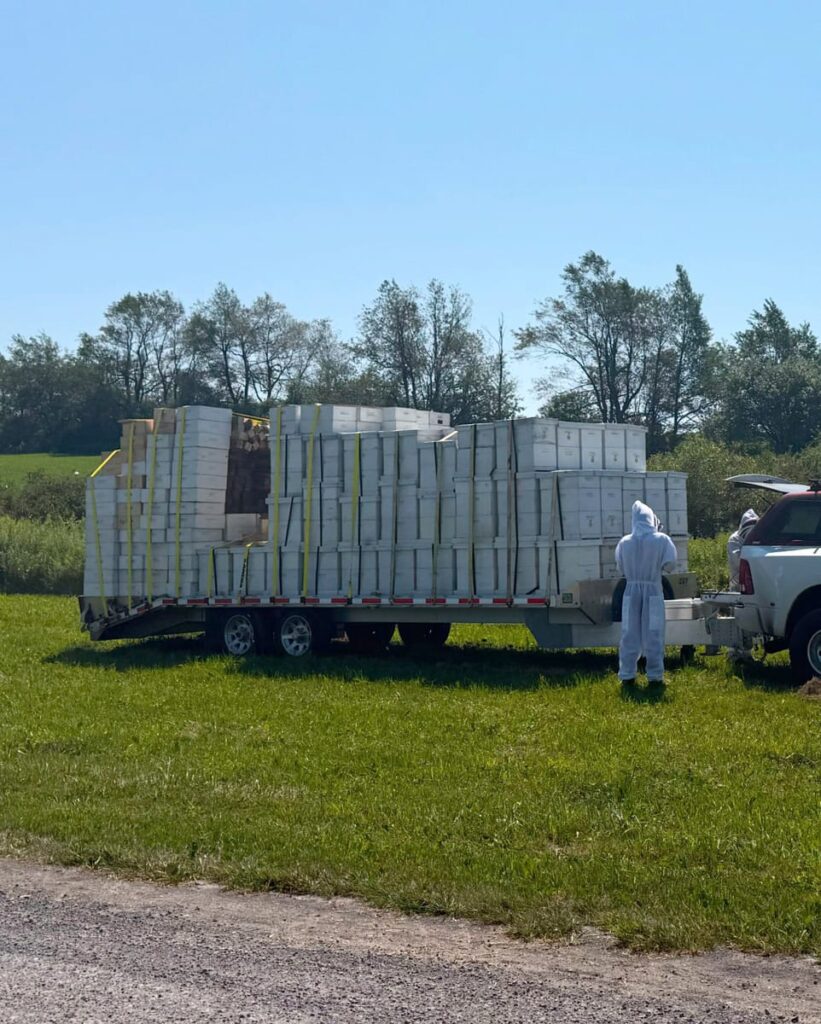
When the bees come home, Joseph sets about winterizing the colonies. This involves making sure they have enough honey for the lean months ahead and treating for mites one last time. His three‑treatment schedule has worked well to keep mite levels under control, and Joseph is thankful for a 90% winter survival rate—far above the national average.
In early January, Joseph’s bees join the great migration to California for the almond pollination. Approximately 90% of all commercial hives in the U.S. are needed to pollinate the 1.5 million acres of almond orchards in California. The industry uses two hives per acre.
For Joseph, this opportunity supplies a much-needed paycheck during a time when his bees would normally be sitting idle in Pennsylvania. His hives come back in March, ready for another year of work and travel.
Selling Honey
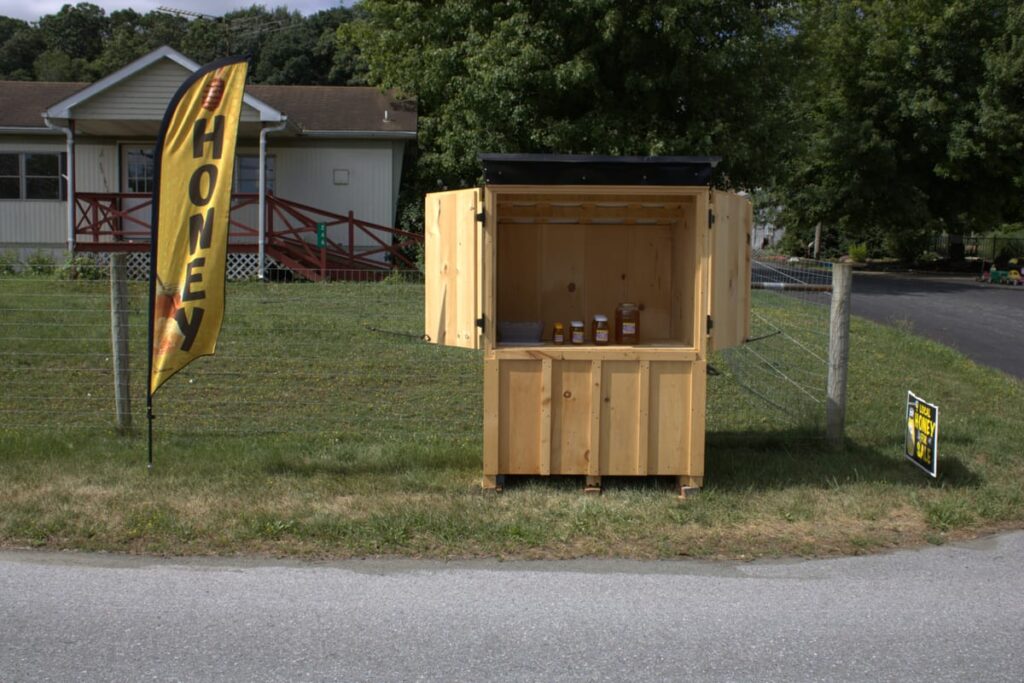
Joseph retails his honey in grocery stores, farmer’s markets, and in a stand at the end of his lane. He also sends some to the produce auction. Leftover honey can be sold by the skid to wholesalers, which is convenient, but less profitable.
Some customers buy Joseph’s products in hopes that honey made from local plants will relieve their allergies. A few seek out his goldenrod honey for possible blood thinning effects. But most customers aren’t concerned about the variety, whether it be spring honey made from dandelion and locust, summer honey made from clover, or fall honey made from goldenrod.
“They just want good, raw honey that they can trust,” Joseph says.
Along with its well‑known health benefits, honey has an extraordinary shelf life. When properly sealed, it will never spoil. In fact, archaeologists have found honey in Egyptian tombs that was still perfectly edible after thousands of years. Its longevity comes from three antimicrobial properties: low moisture, high acidity, and trace amounts of hydrogen peroxide. Over time, honey may crystallize, but a gentle warm‑up will return it to liquid without affecting its quality.
In addition to honey, Joseph sells pollen and beeswax. The beeswax comes from melting down the wax cappings that protect the honey. Customers use it for soap, lip balm, skin care products, and candles.
Worth the Sting
Joseph uses Italian bees, just like most beekeepers in America. He likes them for two reasons: they respond quickly to a strong nectar flow, and they are less aggressive than most other bee varieties.
“I don’t like getting stung that much,” Joseph admits. Thankfully his body has become more tolerant to beestings over the years. The stings hurt less and cause less swelling, and within an hour he has a hard time finding them.
For Joseph, the bee stings are a small price to pay for the opportunity of pursuing his passion of working with bees and sharing their sweetness with others.

About the Business
Double Echo Apiaries sells honey, bees, and beekeeping supplies. They are located at 244 Soapstone Hill Road, Peach Bottom, PA 17563 and can be reached at 717.548.0330.
About the Author
Neil Weaver and his family live in Leola, PA. He is a schoolteacher who enjoys good conversations and raising pigs.
Photos courtesy of Neil Weaver