
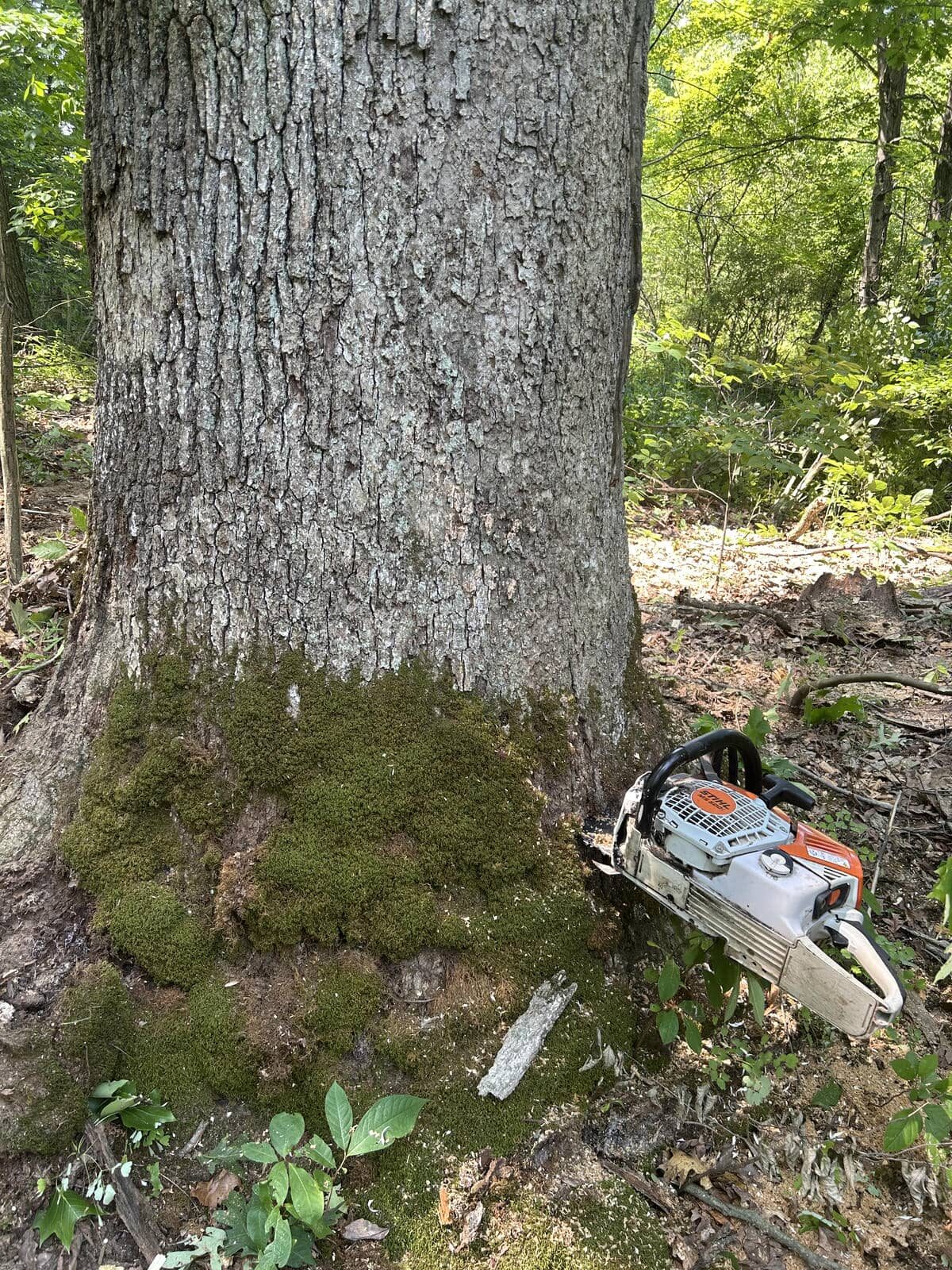
How many of you like sharpening your chains? What, no one? I don’t either. One summer, my cousin and I discovered the perfect sharpening program. We, at an age too young to print, were bucking logs in the sand with 036 Stihls with 25″ bars. We would quickly dull the chain, then Dad would sharpen it while we took a break in the shade. It worked great, but it was too good to last. Eventually, we had to learn to sharpen our own chains, and I suspect we were more careful to avoid dirt after that.
I’ve never been an expert filer. “Don’t sweat the details, just file quickly and get back to cutting wood” has been my mindset. That said, chain sharpening is as important as it is mysterious and frustrating. Someone has said, “Saw filing is simple in theory but impossible in practice.” It is a skill acquired mainly by experience. Understanding the fundamentals of filing will not eliminate the learning curve but should shorten it.
How To File
A beginner will typically saw until the chain is very dull, while a seasoned cutter will sharpen often. It saves frustration and calories to lightly sharpen often instead of waiting until the chain is excessively dull. Once the chain is dull, you will likely hit more dirt than necessary because you must push the saw, and it is harder to sense when the cut is nearly complete. If you sharpen when you should, one or at most two strokes with a good file are sufficient to regain a sharp edge. You are farther ahead at the end of the day to keep your chains sharp, even if it feels like you are wasting too much time sharpening.
What’s the best way to sharpen a chain? Most loggers simply free-file, which means hand-filing without a guide. This is an art that takes time to master, but it’s the fastest way and, unlike using a guide or grinder, allows you to file to your preference. I sharpen dull saws every evening in the shop by clamping the bar in a vise and hand-filing under a good light. In the woods, most cutters will sit on a log and lean over the saw, holding the powerhead in place with their chest while using both hands to file.
When I first started filing, I often tapped a stump vise into the log and clamped the bar in it. This worked well enough to keep the saw from scooting around, but I eventually wearied of carrying it through the woods. Oversize bumper spikes can help keep the saw in place while filing, but they tend to gouge truck beds and loggers’ legs.
File from inside to outside, finish the cutters on one side, then switch filing direction for the other side. If your file is screeching across the tooth like fingernails on a chalkboard, it is not filing. It is challenging to keep the file level throughout the stroke, partly because the filer is looking at it from above.
A roller-style file guide is available from Husqvarna for fifteen dollars and can help a filer learn proper form. However, it takes time to put the guide on each tooth, and I prefer a deeper hook than the guide permits.
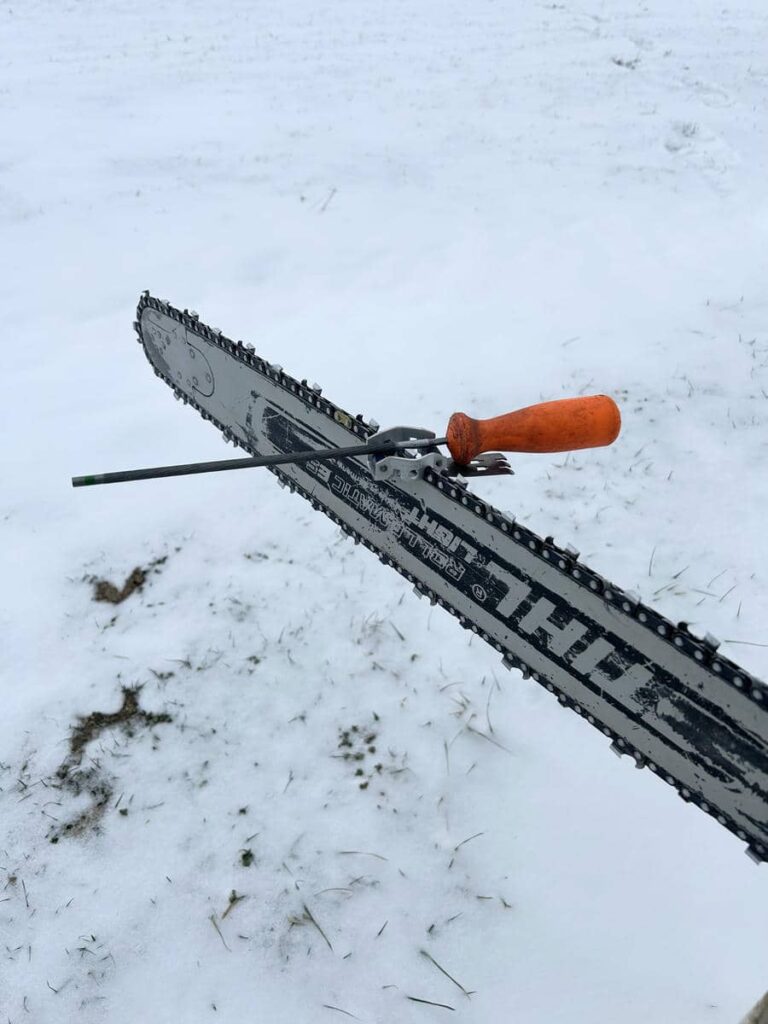
A common error is trying to use a file after it’s worn out. They don’t last long, especially if they get wet. Files cost only two dollars, so don’t waste five dollars of time just because of the Depression-era adage of “use it up, wear it out, make it do, or do without.” Brands differ as to aggressiveness and longevity. I use Oregon files and often wear out two or three files per chain.
Using a bench-style chain grinder works, but it takes almost as long to change chains as it does to sharpen them. Alternately grinding and filing chains doesn’t work well since most grinders don’t create a round profile. I’ve tried using a die grinder, but it’s more difficult to maintain the correct amount of hook with a rotary grinder. It’s also easy to overheat the tooth, which hardens it.
I don’t use my chains until the teeth are filed down to nubbins. There are several reasons an old chain will not perform as well as a newer one. The tooth profile is sloped, so it changes over time. A worn-down tooth doesn’t hold an edge (does the chrome wear thin?), and as all the chain components wear, the chain becomes more unstable. That said, it is possible for a chain to cut well right up until the teeth start breaking off. How long to run a chain might depend on whether you’re cutting firewood in your spare time or doing production logging.

Filing Nuances
Adjusting the amount of hook in the side plate affects performance more than might be expected. According to Oregon, 20% of the file should be above the tooth. Applying downward pressure while filing creates more hook, while applying upward pressure creates less hook. More hook will cut slightly faster since the top plate will have a more acute point, but it will dull more quickly and won’t cut as smoothly. I prefer an aggressive chain that is eager to eat, so I file with more hook than is recommended. It’s said that slow is smooth and smooth is fast, but I prefer a chain that is chomping at the bit, possibly because an aggressive chain feels fast even though it may not actually cut fast.
Adjusting the top plate angle also affects performance. A 25-30º angle is recommended. A steeper angle causes the chain to grab and pull sideways in the cut, resulting in a rough cut. I’ve heard that some milling chains are filed straight across with no top plate angle at all. This results in smoother boards, but they are cutting with the grain.
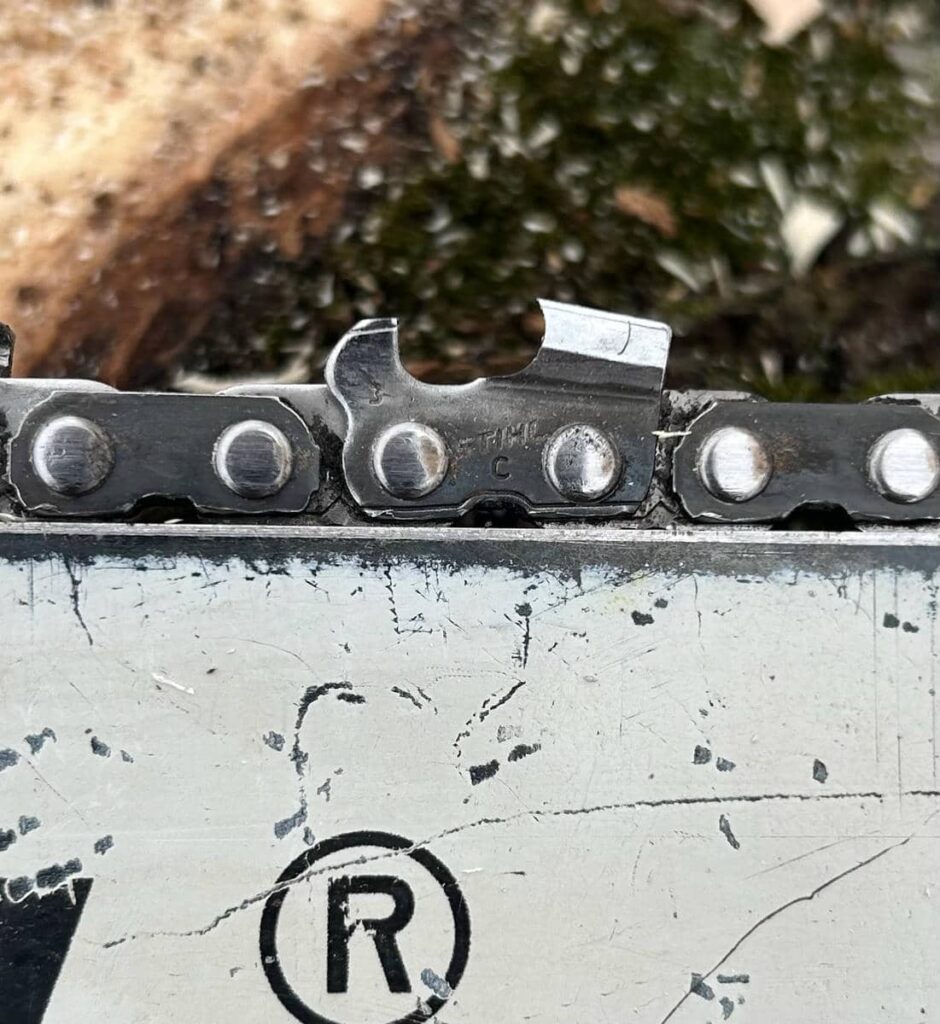
The recommended height of depth gauges is 25-30 thousandths below the height of the top plate. Here is a rule of thumb. Sight across the top of the teeth from the end of the bar. The tops of the depth gauges should align with the underside of the top plates of the teeth. It is important that the depth gauges are filed consistently. I file them only one stroke at a time. As with the teeth, filing from inside to outside is the smoothest. The roller guide from Husqvarna also has a depth gauge guide.
While everyone is different, rookie filers tend to file too deep and too steep, often both. It takes conscious effort to overcome gravity and not file too deeply. A deep hook is difficult to correct because pulling upward on the file tends to make it jump over the top of the tooth. A steeper top plate angle looks sharper, and it really is, but for best performance, it’s best to match the filing angle to the mark on the tooth.
Prevention–The Best Cure
Sharpening is unavoidable, but since few of us enjoy it, how can we reduce the frequency? Iron sharpens iron, but iron also dulls iron. One suggestion is to make it illegal to put nails, screws, fence, taps, or tree steps into trees, but I don’t foresee that happening. While hardware and rocks will quickly ruin chains, dirt is the most common enemy. There is a vast difference in how quickly various soil types dull a chain. Muck is not bad at all, sand and gravel are terrible, and clay is somewhere in the middle.
If there is dirt on a log, it makes a significant difference if the cut is made in the right direction to spit the dirt out of the cut instead of dragging it through. Frozen dirt is almost as hard as concrete and will dull a chain even when not dragged through the cut. I carry a hatchet on my belt and will chip dirt off the cutting area if it’s warranted, but I do so much less than I used to. It is easy to waste more time chipping dirt than sharpening a chain.
You could convince me that a raccoon’s diet consists of 30% dirt. At the very least, it must be a myth that raccoons carefully wash their food before eating it. The points at which large limbs branch out from the main trunk are favorite raccoon restrooms, and that is precisely where we flush-cut the limb. One winter day, a coworker was cutting frozen hard maple with an abundance of coon dens. He filed away an entire chain in a single day.
Ants teach us several things, one of them being the futility of cutting through an ant colony in the base of a hollow tree. Ants excavate dirt up into the hollow center of some trees. It’s always abrasive to cut through, but it’s sudden death for a chain when frozen. If you suspect a tree is hollow, it might save a sharpening to bore into it to check. If it is hollow and dirty, moving up a foot should save both the ants and your chain.
When cutting blowdown timber, cutting dirt is inevitable. If it’s a low-grade tree, it may be permissible to cut it a bit higher to avoid dirt. On a high-value tree buried in dirt, it can work to buck it one log’s length above the stump. The skidder can then lift it, letting you cut from the cleaner underside. This is especially helpful on trees like red oak that have irregularly shaped root spurs shoved into the ground.
Keep Learning
Our SAWW trainer, who participates in Stihl Timbersports competitions, took time to show us the saw chain he uses on his 250cc race saw. While spending hours trying to maximize speed and minimize weight is impractical for real-world logging, it was educational to see how he doctored up his chain. With his chain speed two to three times that of stock saws, the dynamics are different, and some of his tweaks may not even help at normal speeds. He spends four hours grinding, filing, and stoning a new chain to improve speed.
If you sight down the length of a normal chain, you will notice that the left and right top plates overlap. He ground off the inside edges of the top plates until there was a noticeable channel down the center of the chain. This is mainly to reduce weight, but it also reduces speed-robbing drag. I would never have guessed that it would cut well that way. The real-world takeaway is that if you understand the fundamentals of how a chain cuts, you can be more efficient by sharpening the right components the right way at the right time.
Take courage: a chain can be improperly filed and still cut well, but only if it’s sharp.
Cut fast, cut straight, and keep out of the dirt.
Ethan Royer, of Royer Timber, lives with his family in northern Indiana and provides logging services in northern Indiana and southern Michigan. He can be reached at 574.849.0867.